Outbound tools · every price dated
Cold email tools, priced from the page the vendor published
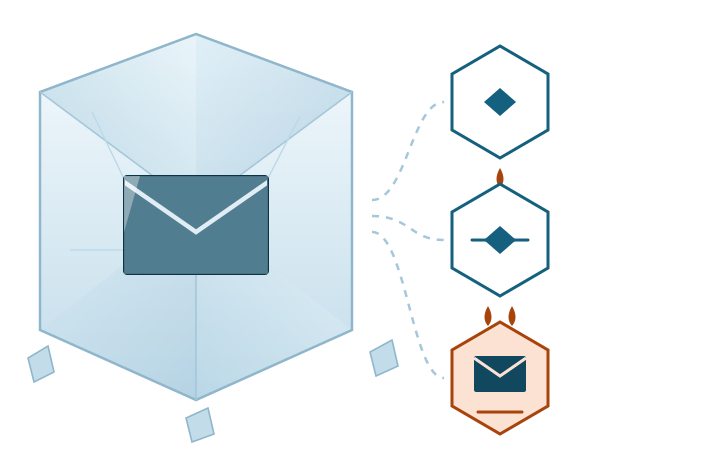
- A lawful basis. Who you may write to at all, which is not the same question in Ohio as it is in Oxfordshire.
- A way out. A working opt-out in the message, and a list of everyone who has used one.
- Your own name on it. A real sender, a real address, a subject line that says what the message is.
Five sending platforms, the finders and enrichment data behind them, and the consent rules that decide who you may write to. Every figure carries the day it was read and the page it came from.
Nobody in this field charges by the inbox
Which makes the obvious comparison impossible until you know what each one counts instead. Three meters cover every platform on this site.
Sent messages
Instantly meters emails a month. lemlist's Email plan caps the month's sends and leaves users and senders uncapped.
People contacted
Woodpecker prices a hundred contacted prospects at a time, and throws the inboxes in. Snov.io counts recipients, and every follow-up to one is free.
Seats, and credits inside them
Apollo charges per seat and hands each seat a pot of credits. lemlist's Multichannel plan is per user too. A seat is a person; a credit is a lookup.
The guides
Every guide →Why the prices here look different to the ones you remember
Because they were read panel by panel. Pricing pages in this category open on whichever billing term flatters them, and the control that switches it is often not where you expect. lemlist and Apollo both open on their annual panel. Instantly's Monthly/Yearly switch sits above the cards and, when tested, moved only under a real mouse click — and on the annual side, every price is still captioned "/monthly".
Read the wrong panel and you can be out by a quarter before you have compared anything. So each page on this site says which panel it read, and what the other one said.
Three of the five vendors disagree with their own figures
Instantly's Hypergrowth plan allows 125,000 emails a month on one panel and 100,000 on another, with its own comparison table backing the lower number. Apollo's banner promises 24% off for annual billing, which is true of its cheapest plan and about 20% on the two above it. Woodpecker's annual panel shows $24.00 a month and $280.00 billed for the year, which is $8.00 apart.
None of those is fatal and none is hidden — every one of them is printed on the vendor's own page, which is exactly why they are quoted here rather than smoothed over. Where the numbers do not reconcile, the gap is published.
What this site does not have
No open rates, no reply rates, no inbox-placement percentages and no scores out of ten. Nobody here has run a campaign through any of these products, and a number that has not been measured is an invention whatever font it is set in. Where a vendor publishes a claim about its own delivery, it appears with the vendor's name attached and stays the vendor's claim.
There is also nothing here about slipping past a filter. Deliverability on this site means the consequence of consent, list quality and a sender who can be identified — and the setup that keeps legitimate mail from being thrown away for a technical reason.
Asked before anyone looks at a price
Is cold email legal?
In the United States, yes, with conditions. The FTC's own compliance guide says "The law makes no exception for business-to-business email" — so CAN-SPAM's requirements apply to a sales email exactly as they apply to a newsletter: an honest subject line, your postal address, a working opt-out, and that opt-out honoured within 10 business days. In the United Kingdom the answer depends on who receives it, and the difference is the single most useful thing on this site. The rules, from the regulators.
Why does one tool cost $35 a month and another $358?
Because they are not selling the same unit. Woodpecker sells contacted prospects, Instantly sells sent messages, Apollo sells seats with a pot of lookup credits inside each one, and Snov.io sells recipients. Two prices are only comparable once you know what each meter counts, which is why the comparison starts with the meter and not the number.
Does this site rank tools by what they pay it?
No, and the ordering is checkable. Five of the platforms covered here run partner programmes and are linked through /go/; the finders, verifiers and every free tool named pay nothing and are recommended anyway where they are the right answer. What each link is worth.
Do you publish open rates or inbox-placement figures?
Never. No campaign has been sent through any of these platforms from this desk, so any percentage here would be invented or borrowed. Where a vendor makes a claim about its own delivery, it is quoted with the vendor's name attached and left as the vendor's claim.
What is a credit, and is one credit one email address?
It is one lookup, and no. Apollo charges 1 credit for an email and 8 for a phone number. Snov.io's own documentation says it charges a credit for a "green" verified address and also a credit for a "yellow" one it could not fully verify. What a credit actually buys.